


In today’s digital-driven world, children are spending more time in front of screens than ever before. Mobile phones, televisions, and tablets have replaced outdoor play and face-to-face interactions. While technology offers countless benefits, excessive screen time can have significant physical, emotional, and cognitive effects on young minds.
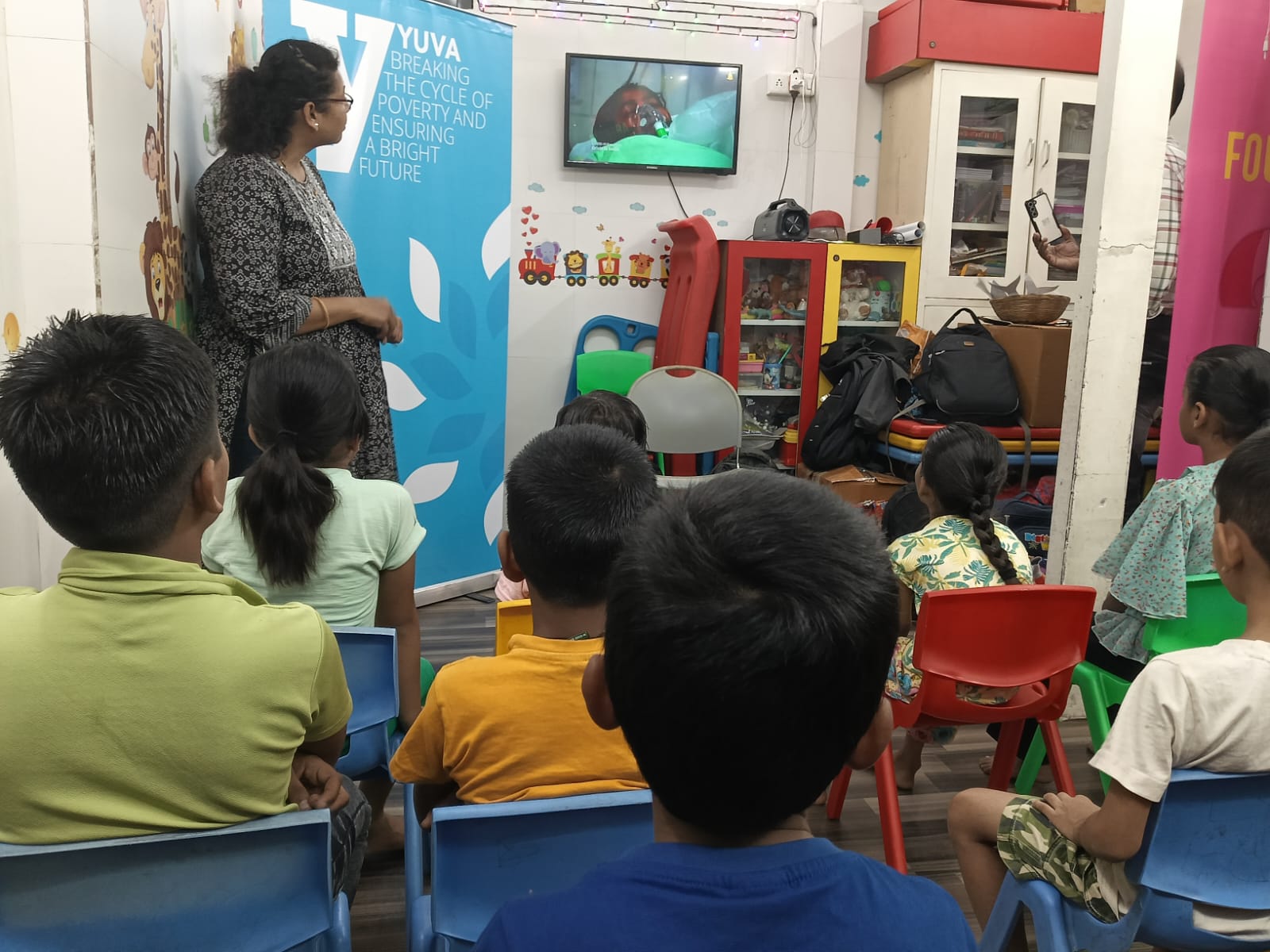
To address this growing concern, YUVA India, in collaboration with Janvi Charitable Trust, Chandivali, Sakinaka, Mumbai, conducted a Screen Time Awareness Session on 20th February 2025. The session aimed to educate children about the impact of excessive screen use and encourage them to adopt a healthier balance between technology and real-world experiences.
A total of 20 bright and curious children participated in the session. Mr Ashley Pereira represented Janvi Charitable Trust, while Ms Vanita Salunke and Mr Vijay Powar from YUVA India played an instrumental role in engaging the children. Ms Vanita Salunke led the session, encouraging children to reflect on their screen habits and guiding them towards healthier alternatives.
Children Speak: How Much Time Do They Spend on Screens?
The session began with a simple yet thought-provoking question
“How much time do you spend on mobile phones or watching TV?”
The children, eager to share, responded immediately. Some admitted to using their phones for one hour daily, while others confessed to spending as much as two and a half hours watching cartoons, playing mobile games, and scrolling through YouTube reels.
Ms Vanita then asked, “Do you think this is good for you?”
The response was loud and clear, a resounding “No!” from all the children.
While they instinctively knew that excessive screen time was not good for them, many had never really thought about why. This opened the door to a deeper discussion on the unseen dangers of prolonged screen exposure.
The Hidden Dangers of Too Much Screen Time
To help the children truly understand the effects of excessive screen use, they were shown a short but powerful video. The video illustrated how mobile phone radiation affects their health in ways they had never imagined.
As they watched, the room fell silent. Some children leaned forward, eyes wide with curiosity, as they saw how mobile phone radiation could
- Harm their eyesight, leading to digital eye strain, blurry vision, and frequent headaches
- Disrupt their sleep patterns, making them feel tired and restless the next day
- Make them less active, reducing their time for outdoor games and physical activities
- Lower their concentration, affecting their ability to focus in school
- Increase dependency on screens, making it harder to detach from digital devices
One young boy turned to his friend and whispered, “I did not know my phone could be bad for my eyes.” Another child looked up thoughtfully and said, “That is why I feel tired when I use my phone for too long.”
This moment of realisation was crucial. They were beginning to understand that their screen habits were not just a harmless pastime, but something that could affect their health, energy, and happiness.
Bringing Back the Joy of a Screen-Free Childhood
After discussing the risks, the focus shifted towards something even more important – what they were missing out on because of too much screen time.
Ms Vanita asked, “Can you remember the last time you spent a whole day playing outside, running, laughing, and exploring without using a phone?”
A few children nodded, but many looked down. Some struggled to remember.
One twelve-year-old boy shared, “I used to love drawing, but now I only watch drawing videos instead of making my own art.”
Another little girl admitted, “My sister and I used to play with our dolls, but now we both just watch cartoons on different phones.”
These simple yet heartfelt confessions highlighted the real cost of excessive screen time. Children were missing out on real-life experiences, creative activities, and genuine human connections.
Finding Balance: How Can Children Reduce Their Screen Time?
The session was not just about raising awareness; it was about finding practical solutions. The children were encouraged to take small steps towards a healthier balance, such as
- Setting a screen time limit of one hour or less for non-educational activities
- Spending more time outdoors, playing games, cycling, or running with friends
- Engaging in creative hobbies, such as drawing, reading, music, or storytelling
- Using technology wisely, choosing educational content over mindless scrolling
- Creating screen-free zones, avoiding mobile use during meals and before bedtime
These were small but powerful changes that could help them reclaim their time, energy, and creativity.
A Simple Challenge That Could Change Their Lives
Before the session ended, the children were given a special challenge
“Try reducing your mobile use for a week and see how you feel.”
A few children looked hesitant, but many seemed excited about the idea.
A little girl said determinedly, “I will ask my mother to keep my phone away at night.”
Another boy smiled and said, “I will go outside and play instead of watching YouTube videos.”
It was heartwarming to see the spark of change in their eyes. They were ready to take control of their screen habits and bring back real joys into their lives.
Final Thoughts: A New Beginning for These Young Minds
As the session concluded, the children left with more than just knowledge. They left with a new perspective on how small changes could lead to a happier and healthier life.
Viara Foundation, in collaboration with YUVA India and Janvi Charitable Trust, is committed to empowering young minds with the right awareness and guidance. This session was not just about limiting screen time, but about helping children rediscover the beauty of real-life experiences.
Thanks to the efforts of Ms Vanita Salunke, Mr Vijay Powar, and Mr Ashley Pereira, these children now have the tools to make better choices for their well-being.
And as one young boy whispered while leaving, “Today, I will play football instead of watching football videos.”
That is the change we hope for. One child at a time. One step towards a brighter, healthier, and more fulfilling childhood.

Leave a Comment