


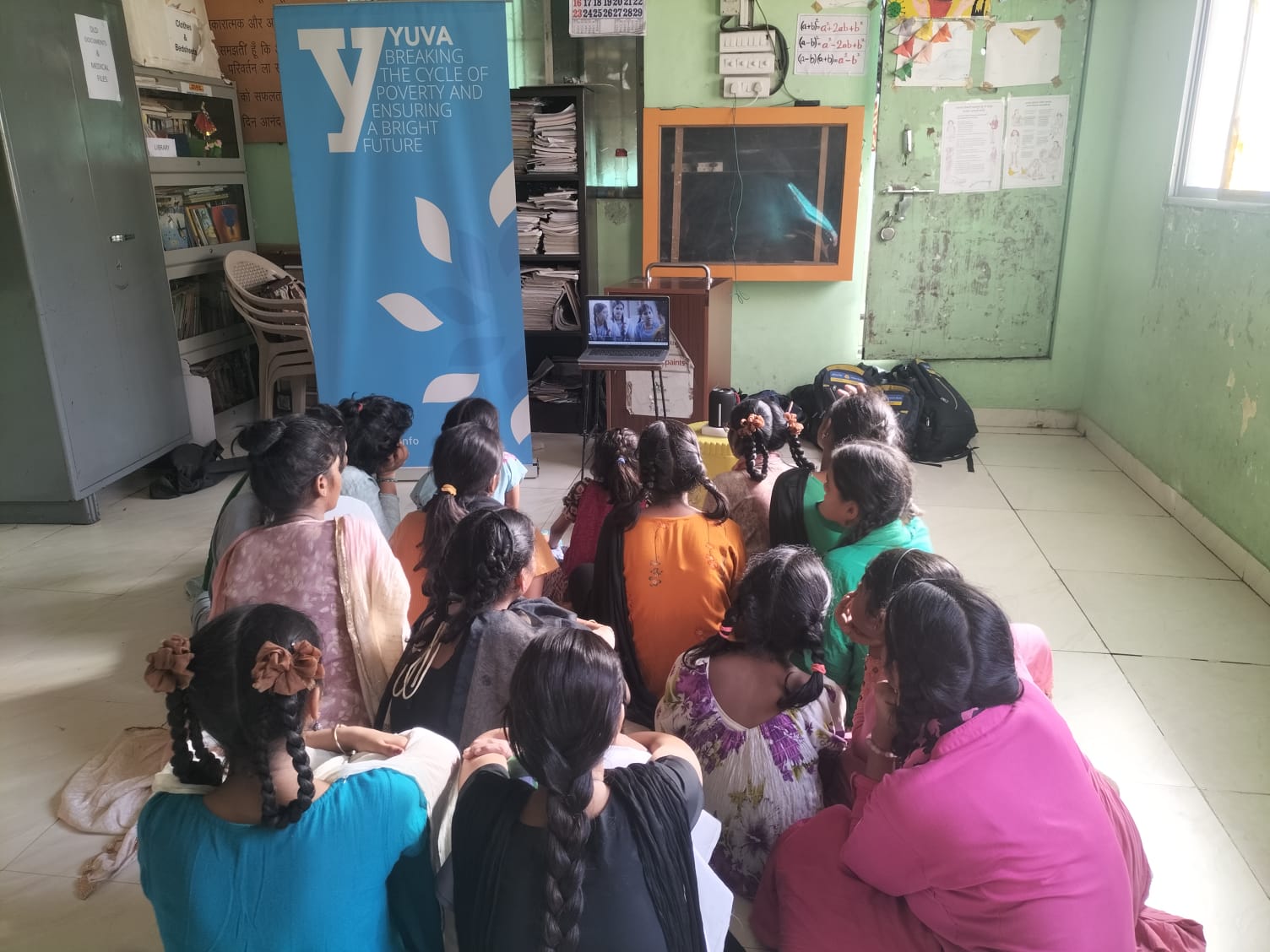
Menstruation is a natural biological process, yet it remains a subject of stigma and misinformation in many communities. Lack of awareness often leads to poor hygiene practices, health issues, and restrictions that negatively impact young girls. To address this, YUVA India, in collaboration with SUPPORT NGO, conducted a Menstrual Hygiene Awareness Session on 22nd March 2025 at Kadamwadi, Santacruz, Mumbai.
The session aimed to educate adolescent girls on the importance of menstrual hygiene, safe practices, and breaking social taboos. It was led by Ms Vanita Salunke from YUVA India, who conducted the awareness session, and Ms Shweta Rane, Probation Officer from SUPPORT NGO, along with a supportive staff member.
Educating and Empowering: A Session to Remember
To make the session engaging, Ms Vanita Salunke showed two informative videos that provided practical insights into menstrual health. These videos helped the girls understand their bodies, debunk myths, and adopt safe hygiene practices.
Key Lessons from the Videos:
- Understanding Menstruation – The videos explained the menstrual cycle in simple terms, helping the girls grasp the biological changes their bodies undergo each month.
- Safe and Hygienic Practices – The importance of using clean menstrual products such as sanitary pads, tampons, and menstrual cups was emphasised. The girls were also guided on the correct way to use and dispose of these products.
- Preventing Infections – Poor hygiene during menstruation can lead to infections. The session stressed the need to change pads every 4–6 hours, wash hands before and after handling menstrual products, and maintain overall cleanliness.
- Challenging Social Taboos – The session addressed misconceptions surrounding menstruation, such as avoiding religious places or certain foods during periods. It encouraged the girls to question and challenge such baseless restrictions.
- Healthy Lifestyle Choices – A balanced diet, regular exercise, and hydration were highlighted as key factors in maintaining menstrual health and reducing discomfort.
Why is Menstrual Hygiene Important for Young Girls?
Many girls face barriers to proper menstrual hygiene due to limited knowledge, lack of resources, and social stigma. Addressing these challenges is crucial for their health, education, and self-confidence.
- Prevention of Health Issues – Poor menstrual hygiene can cause infections and other complications. Using clean products and maintaining hygiene reduces these risks.
- Increased Confidence and Comfort – When girls understand their menstrual cycle and adopt hygienic practices, they feel more confident and comfortable during their periods.
- Regular School Attendance – Many girls skip school due to lack of access to sanitary products and menstrual hygiene education. Creating awareness helps them manage their periods effectively and attend school regularly.
- Encouraging Open Conversations – Breaking the silence around menstruation allows girls to discuss their concerns openly and seek support when needed.
- Empowerment and Independence – Educating young girls about menstruation ensures they grow up with the knowledge and resources to take care of themselves without fear or shame.
Interactive Discussion and Q&A Session
Following the video screenings, an open discussion was held where the girls freely expressed their thoughts and asked questions. Ms Vanita Salunke and Ms Shweta Rane patiently addressed their concerns, covering topics like menstrual cramps, irregular cycles, and emotional changes.
One of the major challenges highlighted was the affordability of menstrual products. The session provided information on sustainable alternatives, such as cloth pads and menstrual cups, which are eco-friendly and cost-effective.
Creating a Safe Space for Girls
The Menstrual Hygiene Awareness Session provided a safe and supportive environment where girls felt encouraged to speak openly about their experiences. Many of them admitted that they had previously believed in menstrual myths, such as the idea that menstruation is impure or that certain foods should be avoided during periods. The session effectively debunked these misconceptions and replaced them with scientifically accurate information.
The Way Forward: Building a Culture of Awareness
By the end of the session, the girls showed increased confidence in discussing menstrual health. The representatives from SUPPORT NGO assured them that they could reach out anytime for further support.
Such initiatives play a crucial role in normalising menstrual health discussions and ensuring that no girl feels ashamed or unprepared for her period. By continuing to educate and empower young girls, YUVA India and SUPPORT NGO are taking a significant step towards breaking menstrual taboos and promoting health and dignity for all.
Conclusion
The Menstrual Hygiene Awareness Session at Kadamwadi was not just an educational event—it was a movement towards change. Through interactive discussions, expert guidance, and engaging videos, the session successfully addressed key menstrual health concerns and promoted safe and hygienic practices.
By spreading awareness, fostering confidence, and advocating for menstrual equity, we can create a world where menstruation is seen as a normal, healthy process and not a source of shame.
Let’s continue this important conversation—because every girl deserves knowledge, dignity, and a period without fear!

Leave a Comment