


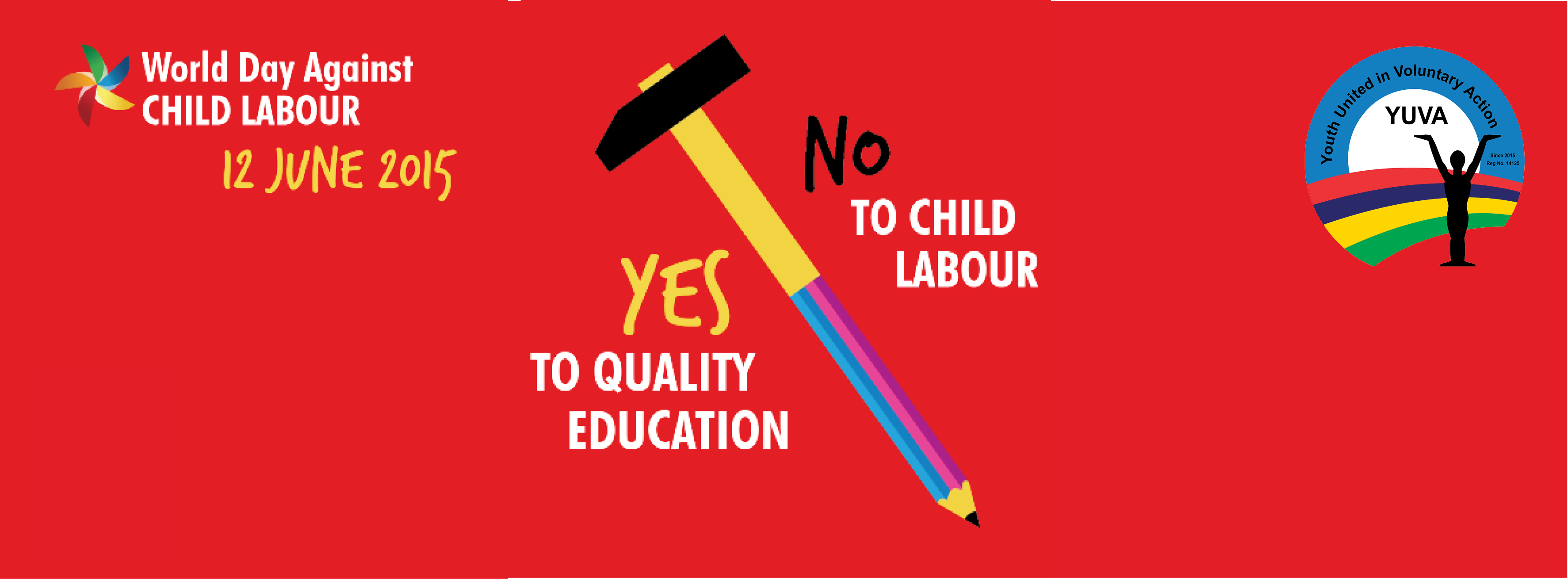
The International Labour Organization (ILO) launched the World Day Against Child Labour in 2002 to focus attention on the global extent of child labour and the action and efforts needed to eliminate it. Each year on 12 June, the World Day brings together governments, employers and workers organisations, civil society, as well as millions of people from around the world to highlight the plight of child labourers and what can be done to help them.
Around the world, large numbers of children are engaged in paid or unpaid domestic work in the home of a third party or employer. These children can be particularly vulnerable to exploitation. Their work is often hidden from the public eye, they may be isolated, and they may be working far away from their family home. Stories of the abuse of children in domestic work are all too common.
World Day 2015 calls for:
- Free, compulsory and quality education for all children at least to the minimum age for admission to employment and action to reach those presently in child labour;
- New efforts to ensure that national policies on child labour and education are consistent and effective;
- Policies that ensure access to quality education and investment in the teaching profession.
What is meant by child labour?
Child labour means work that is prohibited for children of certain age groups. It is work performed by children who are under the minimum age legally specified for that kind of work, or work which, because of its detrimental nature or conditions, is considered unacceptable for children and is prohibited.

Leave a Comment