


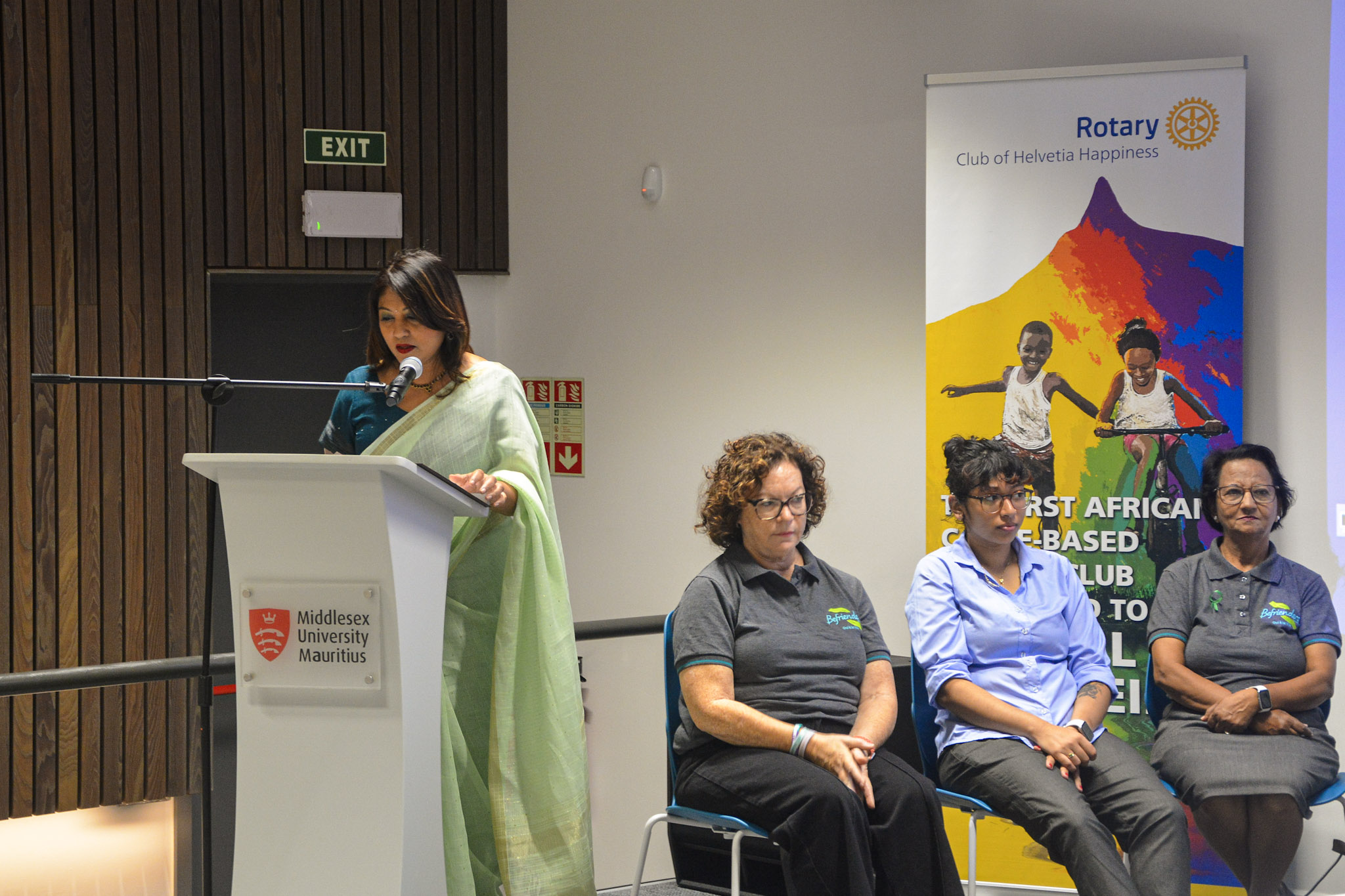
The Rotary Club of Helvetia Happiness, in partnership with Middlesex University Mauritius, hosted a deeply moving Suicide Awareness Symposium on Friday, 10th October 2025, marking World Mental Health Day. The event, held at the New Lecturing Theatre (CAT HILL) on the university campus, brought together students, professionals, and community leaders in a collective effort to shed light on one of the most urgent mental health challenges of our time — suicide prevention.
The symposium featured heartfelt presentations, expert insights, and open conversations that emphasised empathy, understanding, and collective responsibility. It served as a vital reminder that mental health is everyone’s concern and that awareness and early intervention can save lives.
A Nation’s Commitment to Saving Lives
Suicide remains one of the leading causes of preventable death globally, and Mauritius is not immune to its impact. Every life lost to suicide represents a network of pain that extends to families, friends, schools, and workplaces. The symposium was therefore not just an event — it was a collective call for compassion and change.
The morning began with a warm welcome from the organisers, who highlighted the importance of dialogue and community involvement. They reminded attendees that talking about mental health does not show weakness but strength, and that silence is often the greatest barrier to seeking help.
The presence of the Junior Health Minister added significance to the occasion, underscoring the government’s recognition of mental health as a national priority. The Minister expressed support for ongoing collaboration between the public, educational, and private sectors in creating accessible and inclusive mental health services for all Mauritians.
Expert Insights: Understanding Suicide and Prevention
One of the most anticipated moments of the morning was a presentation by a leading mental health specialist, who explored the underlying causes, warning signs, and intervention strategies related to suicide. The talk provided valuable context on how emotional distress, depression, anxiety, and social isolation can intersect to increase vulnerability.
The specialist emphasised that prevention starts with awareness — recognising the early signs of emotional struggle and offering a listening ear before a crisis escalates. The presentation also touched on the power of community connection, illustrating that even small acts of kindness or empathy can interrupt cycles of despair.
Attendees were encouraged to challenge stigma by speaking openly about mental health and to approach those in distress with understanding rather than judgment. The session ended with a strong message: every person has the ability to make a difference, whether by offering support, checking in on a friend, or advocating for better mental health resources.
A Thought-Provoking Panel Discussion
Following the presentation, a panel discussion brought together a group of experts, including psychologists, counsellors, social workers, and mental health advocates. The discussion provided diverse perspectives on suicide prevention, highlighting both the psychological and societal factors that contribute to the crisis.
Panel members explored the complex realities faced by individuals at risk, including the role of trauma, unemployment, academic pressure, and social stigma. They also shared professional insights on how communities and institutions can intervene — from schools introducing early prevention education to workplaces fostering open conversations about stress and burnout.
Audience members had the opportunity to engage directly with the panel through questions, sparking an honest and hopeful dialogue. Many attendees expressed gratitude for the opportunity to learn practical ways to help someone in distress, such as recognising verbal and behavioural warning signs, maintaining non-judgmental communication, and connecting individuals with professional help.
Collective Responsibility: Building Hope and Resilience
The symposium’s message was clear: suicide prevention is a shared responsibility. Every individual, family, and organisation can play a part in creating a safer, more compassionate society. The Rotary Club of Helvetia Happiness and Middlesex University Mauritius both reinforced their commitment to raising awareness and empowering people with the knowledge and tools to act.
Mental health professionals present at the event reminded the audience that early support can make a lasting impact. Encouraging people to seek help — whether through counselling, helplines, or community outreach — is essential to reducing suicide rates.
The event also highlighted the importance of breaking cultural and generational barriers that often discourage people from discussing mental health. Creating safe spaces in schools, workplaces, and families for open conversations can reduce stigma and make it easier for individuals to ask for help when they need it most.
A Moment of Unity and Hope
As the event came to a close, participants reflected on the stories, experiences, and lessons shared throughout the morning. The atmosphere was one of unity — people from different walks of life standing together for a common cause: awareness, healing, and hope.
The organisers expressed deep gratitude to everyone who attended and encouraged ongoing dialogue about mental health beyond World Mental Health Day. The success of the symposium demonstrated that when communities come together, change becomes possible.
By promoting understanding and compassion, events like this remind us that no one should ever feel alone in their struggles. Together, Mauritius can continue to build a future where mental health is prioritised, and every person knows that support is available.


Tereza Röslerová – Communications Officer

Leave a Comment