


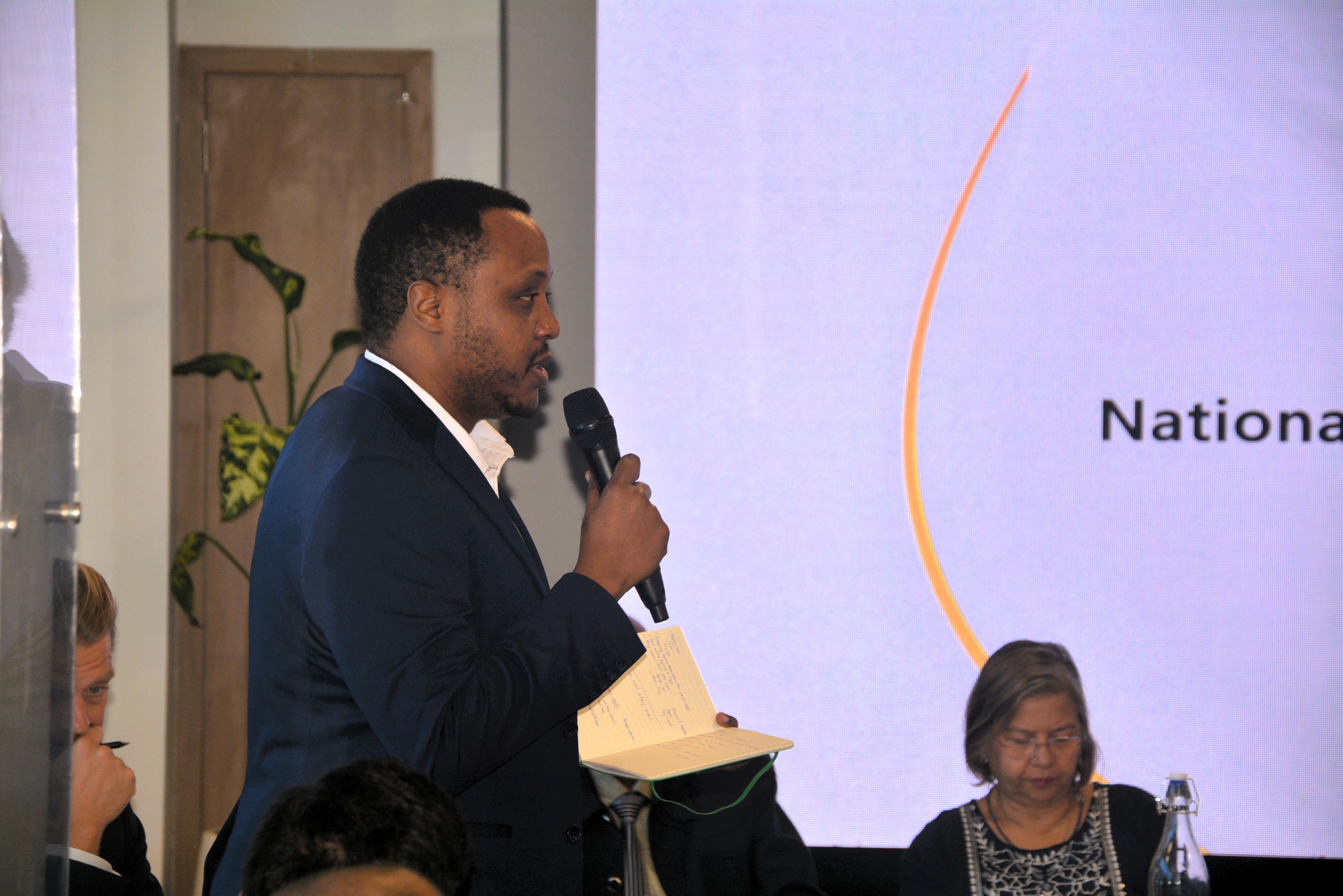
At a time when development discussions are becoming more nuanced and evidence-driven, the Ministry of Social Integration, Social Security and National Solidarity, in collaboration with Statistics Mauritius and the National Empowerment Foundation, convened a Follow-Up Consultation with Non-Governmental Organisations on the proposed National Multidimensional Poverty Index (MPI). Held at The Docks, the session brought together policymakers, technical experts, and civil society organisations to refine and strengthen the national approach to measuring poverty.
Among the NGOs in attendance was YUVA, which participated actively in the discussions. As an organisation working closely with vulnerable communities, YUVA’s presence reflected the importance of grounding national policy frameworks in lived realities.
The consultation was graced by Ashok Kumar Subron, Minister of Social Integration, Social Security and National Solidarity, and Kuvalayan Kugan Parapen, Junior Minister of Social Integration, Social Security and National Solidarity. Their participation signalled that the proposed National MPI is not merely a statistical exercise, but a policy priority anchored at the highest levels of government.
Rethinking Poverty: Beyond Income
For many years, poverty has largely been defined through income thresholds. While income remains an essential metric, it does not capture the full spectrum of deprivation experienced by individuals and families. A household may earn slightly above a monetary poverty line yet still live in unsafe housing, lack tenure security, or be exposed to environmental hazards such as flooding.
The proposed National Multidimensional Poverty Index aims to address these gaps. Rather than focusing solely on income, it measures overlapping deprivations across carefully selected dimensions aligned with national Sustainable Development Goals (SDGs). Each country that adopts an MPI defines its own dimensions, indicators, cut-offs, and poverty line, ensuring that the measure reflects local priorities and realities.
Globally, 45 countries have already published a national MPI, including six within the Southern African Development Community (SADC): Angola, Botswana, Malawi, Mozambique, Namibia, and Seychelles. Mauritius is now moving toward joining this group, signalling a shift toward more comprehensive and policy-relevant poverty measurement.
Multidimensional Poverty in Mauritius and Rodrigues
A significant portion of the consultation focused on understanding deprivation across both Mauritius and Rodrigues. While part of the same republic, the two islands present different socio-economic contexts. Geographic isolation, labour market structure, access to services, and environmental vulnerability all shape how poverty manifests in Rodrigues compared to mainland Mauritius.
Participants were presented with data outlining the percentage of the population deprived in each proposed indicator. This evidence-based approach stimulated rich exchanges. NGO representatives, including YUVA, provided practical insights drawn from community engagement—helping to interpret the data beyond its numerical presentation.
The dialogue reinforced an essential principle: statistics are powerful, but their interpretation benefits immensely from field experience. By combining quantitative analysis with grassroots perspectives, the National MPI can better reflect reality on the ground.
Housing as a Key Dimension
Among the identified dimensions and indicators, housing emerged as a central pillar of the proposed MPI. Four specific housing indicators were highlighted:
- Use of concrete building materials
- Overcrowding
- Tenure security
- Flood risk
Each of these indicators addresses a distinct but interconnected aspect of deprivation.
Concrete building materials serve as a proxy for structural durability and safety. Families living in homes constructed with fragile or temporary materials face greater exposure to extreme weather and long-term insecurity.
Overcrowding affects not only comfort but also health, privacy, and educational outcomes. Children studying in congested environments may struggle academically, and family tensions can intensify in confined spaces.
Tenure security is closely tied to dignity and stability. Households without secure tenure may hesitate to invest in home improvements and remain vulnerable to displacement. This insecurity can also limit access to financial services and social protection mechanisms.
Flood risk, increasingly relevant in the context of climate change, introduces an environmental dimension to poverty measurement. Identifying households located in high-risk zones enables authorities to design targeted interventions, including infrastructure improvements and relocation strategies.
NGOs, including YUVA, highlighted how these housing-related challenges often overlap, creating compounded vulnerabilities for certain families. The multidimensional framework is particularly valuable in capturing such overlapping deprivations.
Why Adopt a Multidimensional Poverty Measure?
The consultation also addressed the broader rationale behind adopting a National MPI.
First, it enhances policy targeting. By identifying which deprivations cluster together, government agencies can design integrated programmes rather than isolated interventions. For example, housing upgrades may need to be paired with tenure regularisation or flood mitigation measures.
Second, it strengthens accountability. Clear indicators and measurable cut-offs allow policymakers to track progress over time. This transparency supports evidence-based planning and resource allocation.
Third, it promotes inter-ministerial collaboration. Poverty intersects with housing, health, education, employment, and environmental policy. A shared multidimensional framework fosters coordination across sectors.
Finally, it ensures that poverty measurement reflects lived experience. Organisations such as YUVA, working directly with youth and vulnerable communities, can provide insights that refine indicators and ensure they remain relevant.


A Collective Commitment to National Solidarity
The tone of the consultation at The Docks was both technical and collaborative. Minister Subron and Junior Minister Parapen emphasised that the development of the National MPI is an evolving process. It requires robust data, but also continuous engagement with civil society.
The participation of NGOs—including YUVA—demonstrated a shared commitment to ensuring that poverty measurement translates into meaningful action. The consultation was not merely about validating indicators; it was about strengthening a tool that can guide policy decisions for years to come.
As Mauritius moves forward with finalising its National Multidimensional Poverty Index, the importance of inclusive dialogue remains clear. Measuring poverty in a multidimensional way is not just about statistics—it is about recognising the complexity of deprivation and responding with coordinated, targeted, and compassionate policies.
In doing so, Mauritius is reinforcing a broader vision of national solidarity—one that seeks not only to reduce poverty, but to understand it in all its dimensions.

Leave a Comment