


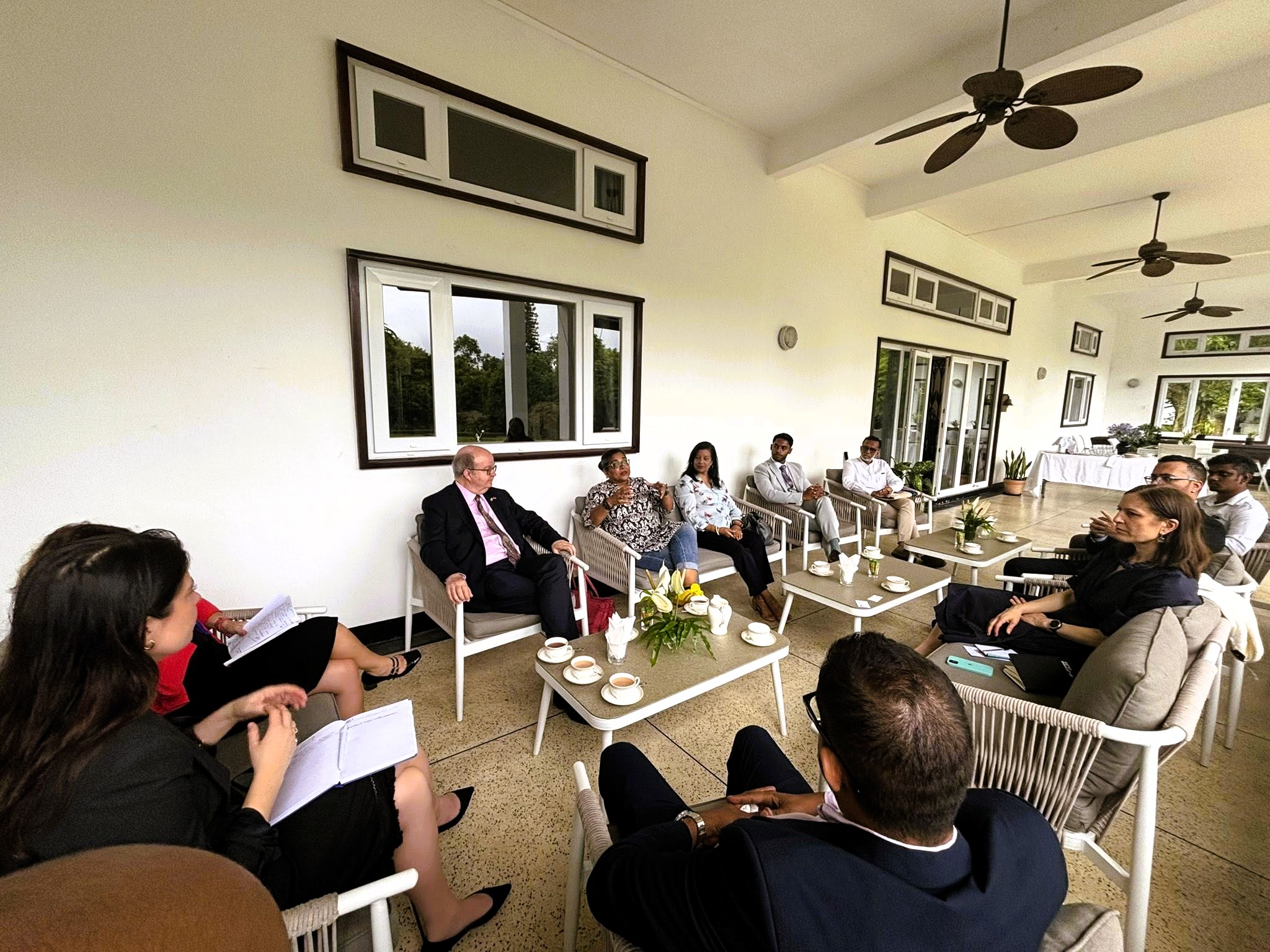
On 3 February 2026, YUVA had the honour of attending a Human Rights Roundtable convened by the United Kingdom’s Human Rights Ambassador, Ms Eleanor Sanders. The gathering brought together a diverse group of eight non-governmental organisations working across different sectors of Mauritian society. While each organisation came with its own priorities and lived realities, the roundtable created a rare and valuable space for honest exchange, shared learning, and collective reflection on how human rights can be strengthened through collaboration.
The format of the meeting was simple yet effective. Each organisation was invited to present its work, outline current challenges, and highlight areas where international partnerships could help move the needle. What emerged was a rich tapestry of grassroots action, policy advocacy, and community-led initiatives—each addressing a different dimension of dignity, inclusion, and social justice in Mauritius.
A significant portion of the discussion focused on the rights of LGBTIQIA+ people. Three of the eight NGOs present work specifically in this area, reflecting both the urgency of the issues and the growing strength of advocacy movements on the island. Among them were Collectif Arc-en-Ciel and the Young Queer Alliance (YQA), two organisations that have long played a central role in pushing for equality and social acceptance.
The Young Queer Alliance was represented by its Secretary, who offered a clear and thoughtful overview of the organisation’s ongoing work. He spoke about efforts to advance legal recognition for trans people in Mauritius, an issue that continues to affect access to basic rights, services, and personal safety. He also addressed the organisation’s advocacy for marriage equality for same-sex couples, framing it not only as a legal matter but as a question of equal dignity under the law. His intervention underscored how legislative gaps translate into real, everyday challenges for LGBTIQIA+ individuals and families.
The presence of multiple LGBTIQIA+ organisations allowed for a broader conversation about both progress and remaining barriers. While there was recognition of increased visibility and dialogue in recent years, speakers were candid about persistent stigma, social exclusion, and the slow pace of legal reform. The exchange highlighted the importance of sustained advocacy and the need for allies—locally and internationally—to help amplify these voices.
Another compelling presentation came from Kolektif Rivier Nwar, an organisation representing underprivileged communities on the west coast of Mauritius. Their work focuses on empowering people living in conditions of economic hardship through locally driven projects. What stood out was not only the creativity of their initiatives, but the tangible success stories they shared—local residents gaining skills, securing livelihoods, and reclaiming a sense of agency within their communities. Their intervention served as a reminder that human rights are inseparable from economic justice and that community-led solutions can be both effective and sustainable when people are given the right support.
The roundtable also included an organisation working with children with disabilities and special needs. Their presentation shed light on the daily realities faced by families navigating inadequate infrastructure, limited resources, and social misconceptions. Access to inclusive education, specialised healthcare, and long-term support remains uneven, and the organisation emphasised the need for policies that move beyond charity toward rights-based inclusion. Their contribution added another important layer to the discussion, reinforcing the idea that human rights must encompass all stages of life and all forms of ability.
YUVA’s participation in the roundtable centred on our holistic approach to youth and community development. Our representative outlined YUVA’s four core pillars: Education, Employment, Empowerment, and Health. Each pillar reflects a belief that sustainable social change requires addressing multiple, interconnected needs rather than isolated issues.
Particular emphasis was placed on our work in empowering women to become entrepreneurs and build independent livelihoods. By providing training, mentorship, and access to networks, YUVA supports women in transforming ideas into viable businesses. This approach not only strengthens individual economic security but also has a ripple effect withińD achieving greater autonomy and confidence within their families and communities. In a context where women often face structural barriers to employment and finance, entrepreneurship becomes a powerful tool for both empowerment and resilience.
As the presentations concluded, the discussion naturally evolved into a broader exchange about shared challenges and opportunities for collaboration. Participants reflected on the importance of solidarity across movements—recognising that struggles for gender equality, LGBTIQIA+ rights, disability inclusion, and economic justice are deeply interconnected. There was a strong sense that progress in one area can reinforce progress in others, provided organisations continue to learn from each other and work together.
The final part of the roundtable was perhaps the most forward-looking. Ms Eleanor Sanders invited participants to speak openly about the kind of support they would like to see from the United Kingdom and its institutions. Rather than a one-sided conversation, this moment felt like an invitation to co-create solutions. Organisations spoke about the need for capacity-building, technical expertise, policy dialogue, and platforms that allow local voices to be heard at international levels. There was also discussion about the value of long-term partnerships over short-term projects, particularly when dealing with deeply rooted social issues.
For YUVA, the roundtable reaffirmed the importance of spaces that bring diverse actors together around a shared commitment to human rights. Listening to the experiences of other organisations—whether advocating for queer rights, supporting coastal communities, or working with children with special needs—offered valuable perspective and inspiration. It reminded us that while our focus areas may differ, the underlying goal is the same: to create a society where everyone has the opportunity to live with dignity, security, and purpose.

As we left the meeting, there was a clear sense that this was not an endpoint, but a starting point for deeper engagement. The conversations initiated on 3 February 2026 highlighted both the challenges ahead and the collective strength that exists within Mauritius’ civil society. With continued dialogue, mutual support, and meaningful international partnerships, these efforts have the potential to translate into lasting change for the communities we serve.

Leave a Comment