


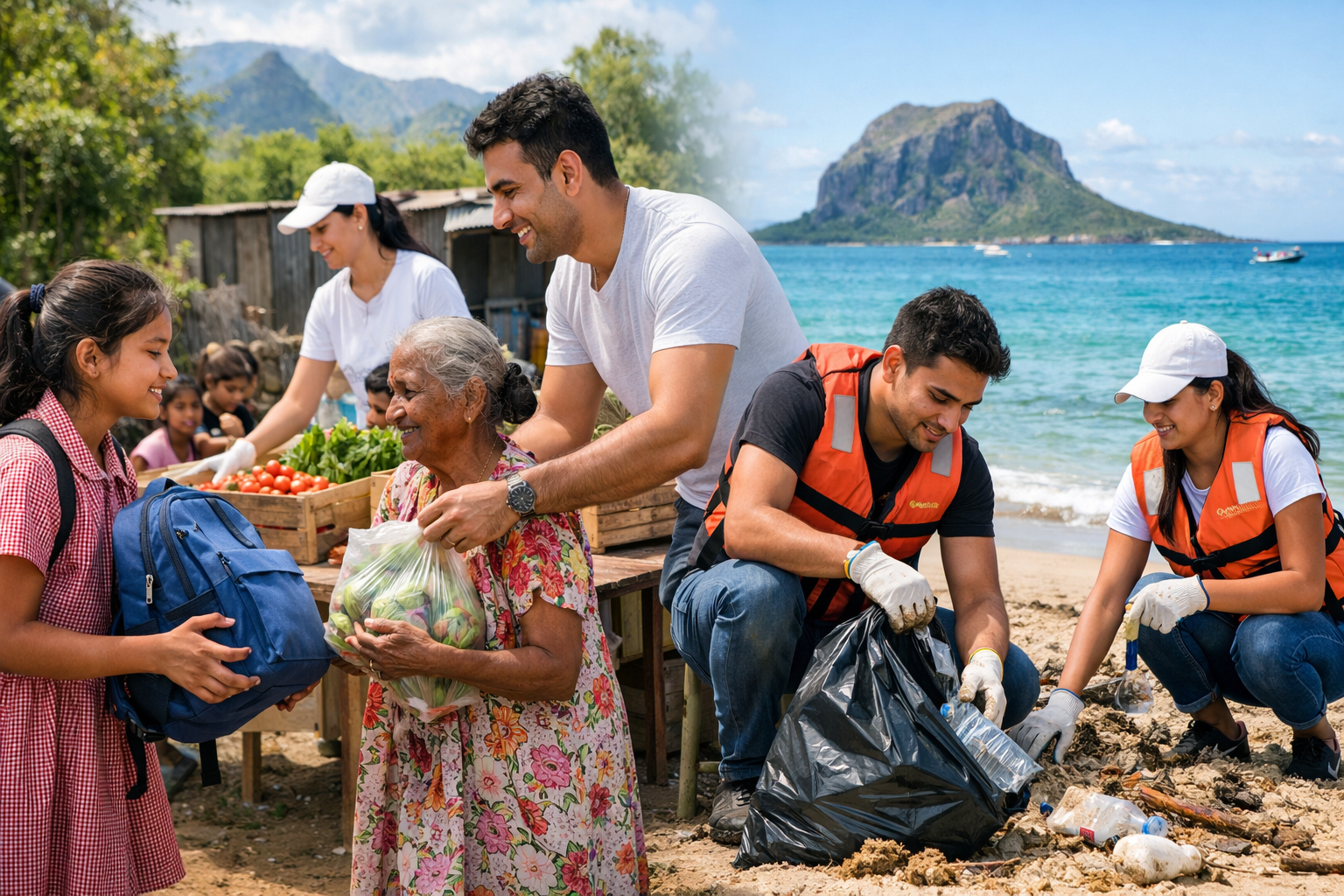
Mauritius is often celebrated for its natural beauty and economic progress, yet like every society, it carries complex human realities beneath the postcard view. Some families face persistent financial stress, some young people struggle with confidence, direction, or emotional well-being, and some communities need stronger access to learning support, protection, and opportunity. This is where an NGO steps in, not as a “rescuer”, but as a practical bridge between needs and solutions.
If you have ever wondered what does an NGO do in Mauritius, this article will give you a clear, grounded explanation. We will cover what an NGO is, the role of NGOs Mauritius communities rely on, how they are funded, and what ethical accountability looks like when impact genuinely matters.
What an NGO is in simple language
Let’s start with NGO meaning Mauritius in everyday terms.
An NGO is a Non-Governmental Organisation. In plain language, it is a group set up to serve a social or community purpose rather than to make profit. “Non-governmental” does not mean anti-government. It simply means the organisation is not a government department. Many NGOs collaborate with government bodies, schools, local councils, and national institutions.
Most NGOs exist to address a gap. Sometimes the gap is practical, like access to food, school supplies, counselling, or training. Sometimes it is systemic, like preventing violence, building youth employability, or improving mental health literacy. The key idea is this: an NGO uses structured programmes, trained people, and community relationships to create positive social change.
What NGOs typically do in Mauritius
So, what does an NGO do in Mauritius in practice?
While each organisation has a different mission, NGOs commonly focus on areas such as:
1) Education and learning support
Many NGOs work alongside schools to strengthen learning outcomes. This may include tutoring, mentoring, after-school programmes, digital learning access, literacy initiatives, or support for children with learning difficulties. The goal is not only academic success, but also confidence, attendance, and long-term engagement with education.
2) Youth development and employability
A major part of the role of NGOs Mauritius is helping young people build life-readiness. This can include communication skills, goal-setting, career exposure, internships, entrepreneurship training, and employability workshops. Strong youth programmes often combine skills with mindset, because competence without self-belief rarely holds under pressure.
3) Health and well-being support
Some NGOs support physical health awareness, disability inclusion, community care, and mental health education. In Mauritius, mental health and emotional well-being are increasingly recognised as crucial, especially for adolescents and families navigating stress, conflict, or instability.
4) Protection, safety, and prevention
NGOs may work in child protection, safeguarding, gender-based violence prevention, and safe reporting pathways. This work tends to be less visible than distribution drives, but it is often more transformative because it reduces harm before it escalates.
5) Poverty alleviation and family support
Many NGOs provide direct support such as food assistance, school materials, household essentials, emergency relief, and referrals to services. At their best, these efforts are paired with longer-term support, like skills training for caregivers or structured pathways to stability.
6) Environment and community resilience
Environmental NGOs focus on conservation, waste reduction, climate awareness, and community actions such as clean-ups, reforestation, and coastal protection. In island contexts, resilience is not theoretical. It is lived reality.
In short, NGOs in Mauritius often balance two things: immediate needs and long-term change. Both matter. The art is knowing when to provide relief and when to build capacity.
How NGOs work with communities, schools, and partners
A well-run NGO does not “deliver help” like a parcel service. It builds trust, listens well, and co-designs solutions with the people most affected.
Here is how this typically looks:
Community-based engagement
Effective NGOs begin by understanding the community context. What are the lived challenges? What strengths already exist? Who are the informal leaders, youth role models, and community anchors? When programmes respect local realities, participation rises and outcomes become sustainable.
School collaboration
Schools are central ecosystems. NGOs often partner with educators to identify learning needs, behavioural challenges, attendance patterns, and psychosocial support requirements. This does not mean schools “hand over” problems. It means the school becomes a partner in creating supportive environments for children and adolescents.
Partner ecosystems
NGOs also collaborate with social workers, health professionals, local businesses, faith-based groups, and government institutions. This matters because complex problems rarely have single-lane solutions. A young person may need tutoring, emotional regulation tools, family support, and career guidance, all at once. Partnerships make that coordination possible.
Programmes with measurable goals
Increasingly, NGOs are expected to demonstrate results. That means setting clear objectives, tracking progress, collecting feedback, and adapting interventions based on evidence rather than assumptions. This is where social impact moves from good intentions to real-world outcomes.
Funding, ethics, and accountability
Many people ask how NGOs are funded, and it is a fair question. Funding shapes capacity, and it can also shape integrity.
Common funding sources
NGOs may receive funding through:
- Individual donations
- Corporate partnerships and CSR funding
- Grants from foundations or institutions
- Fundraising events
- International development funding (for some sectors)
- In-kind support such as volunteer time, venue space, or materials
Ethics and accountability
Accountability is not only about finances. It is also about how people are treated, how programmes are run, and whether outcomes are honestly reported.
Strong NGOs typically prioritise:
- Transparent budgeting and reporting
- Safeguarding policies, especially when working with children and vulnerable groups
- Clear governance structures, such as boards and oversight processes
- Responsible storytelling, avoiding pity-based marketing
- Data privacy and respectful consent
- Regular monitoring and evaluation, not only “feel-good” testimonials
A simple way to think about ethical NGO work is this: the community is not a marketing asset. People’s lives are not proof-points. Dignity is non-negotiable.
The difference between charity, CSR, and NGOs
These terms are often used interchangeably, but they are not the same.
Charity
Charity usually refers to giving resources to meet immediate needs, such as food, clothing, or emergency support. Charity can be essential in crisis moments. The limitation is that charity alone may not change the underlying causes of hardship.
CSR
CSR stands for Corporate Social Responsibility. It is how businesses contribute to social good, often through funding, volunteering, or partnerships. CSR can be powerful, especially when it supports long-term programmes rather than one-off events.
NGOs
NGOs are organisations created specifically to address social issues through structured interventions. They may deliver charitable services, partner with CSR initiatives, and collaborate with institutions, but their core identity is programme-driven social impact.
The healthiest ecosystems are not “either-or”. Mauritius benefits when charities meet urgent needs, CSR fuels resources and reach, and NGOs design and deliver evidence-informed solutions.
YUVA’s model: prevention, skill-building, leadership development
At YUVA, the approach is grounded in one core idea: sustainable change is built, not donated.
Prevention
Prevention means working upstream, before challenges become crises. This includes strengthening protective factors in young people, improving emotional literacy, and building supportive community cultures.
Skill-building
Skills are not only technical. Life-skills like communication, self-management, decision-making, and resilience are often the difference between potential and progress. Skill-building programmes give young people tools they can practise, not slogans they can repeat.
Leadership development
Leadership is not reserved for extroverts or high-achievers. It is the capacity to take responsibility for choices, influence positively, and act with integrity. Leadership development helps young people step into agency, especially those who have learned to shrink themselves in difficult environments.
This three-part model creates impact that can be measured in behaviour, confidence, school engagement, and long-term life outcomes. It also honours something deeply human: people do better when they feel safe, capable, and seen.
Closing thoughts
When people ask, what does an NGO do in Mauritius, the most accurate answer is this: it turns care into systems. It translates concern into programmes, partnerships, and measurable outcomes. At their best, NGOs help communities grow stronger from the inside out, not dependent, but empowered.
If you are exploring how to support meaningful youth development, prevention-focused work, and leadership-based growth, there is a clear next step.

Leave a Comment