


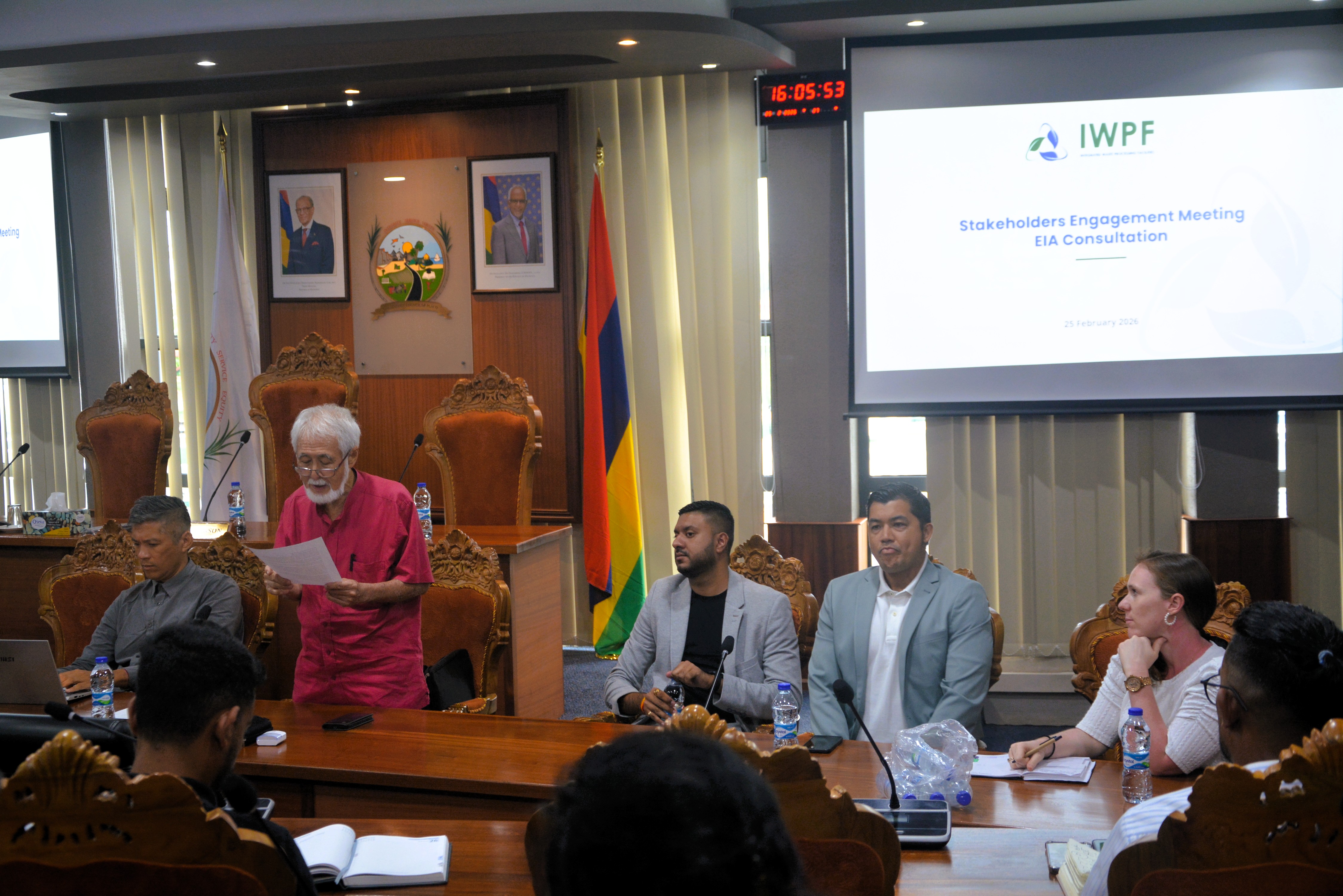
On 25 February 2026, representatives of YUVA attended a high-level stakeholder engagement workshop at the District Council of Flacq as part of the Environmental Impact Assessment (EIA) consultation process for the proposed Development of Two Integrated Waste Processing Facilities (IWPF) in Mauritius. The project, being implemented under a Build-Own-Operate (BOO) model (Procurement Ref: Env/Swm/Rfp/Boo/01/2022-2023), represents a major step toward transforming the country’s solid waste management framework.
The session brought together government officials, environmental consultants, private sector representatives, community members, and civil society organizations to examine the environmental, economic, and social dimensions of the project. With municipal waste volumes steadily increasing across Mauritius, the initiative seeks to modernize national waste treatment systems while reducing dependence on landfills.
Project Overview: Two Strategic Facilities
The Integrated Waste Processing Facilities project will establish two major treatment plants—one in the north and one in the west of the island. These facilities are designed to process municipal solid waste using advanced sorting and recovery technologies aligned with circular economy principles.
For the northern site, the proposed location is a plot of land within an industrial zone situated next to Eastern Mix. Positioning the facility within an existing industrial area is intended to minimize disturbance to residential communities while leveraging established infrastructure and accessibility.
The project is being implemented by IWPF, with its engineering partner Lark Engineering contributing technical expertise in plant design and operational systems.
Technical Presentation by IWPF
The workshop featured a detailed presentation by Mr. Durgesh Teeluckdharry, Chief Operating Officer of IWPF, who outlined the operational structure and step-by-step processes involved in setting up and running the facilities.
A central feature of the initiative is the introduction of a three-bin waste segregation system to be implemented nationwide:
- Wet Waste – Organic and biodegradable materials such as food waste
- Dry Recyclables – Paper, plastics, metals, and glass suitable for recycling
- Other Waste – Residual materials that cannot be recycled or composted
The provision of three distinct bins is expected to significantly improve waste sorting efficiency at source. Mr. Teeluckdharry emphasized that public participation will be essential to the system’s success and that awareness campaigns will accompany the rollout.
Importantly, the project is also projected to create substantial employment opportunities. The labour-intensive nature of sorting and processing operations will require considerable manpower, generating direct jobs within the facilities as well as indirect employment in logistics, maintenance, and support services.
Mr. Teeluckdharry further detailed the phased implementation plan, including site preparation, infrastructure development, equipment installation, commissioning, and ongoing monitoring. Under the BOO model, the private operator will finance, construct, and manage the facilities over an agreed concession period, ensuring operational accountability and performance standards.
Environmental Risk Assessment by Ecosis
Following the technical briefing, Mr. Tony Lee Luen Len from Ecosis presented the Environmental Impact Assessment findings. As the appointed risk assessor, Ecosis is responsible for evaluating environmental risks and recommending mitigation strategies.
Mr. Lee Luen Len explained that the assessment focused on potential impacts relating to:
- Air pollution
- Noise pollution
- Water contamination
He reassured participants that modern waste processing technologies incorporate stringent control systems to minimize environmental harm.
Mitigation Measures Explained
A comprehensive mitigation framework has been proposed to address potential risks in the following areas:
Groundwater Protection
Installation of impermeable surfaces, leachate collection systems, and monitoring wells to prevent contamination.
Soil Quality
Proper handling and remediation measures during construction and operation to maintain soil integrity.
Waste Management
Responsible management of operational waste streams, including safe disposal and recycling protocols.
Occupational Health & Safety
Implementation of strict safety standards, worker training programs, protective equipment usage, and emergency response systems.
Biodiversity
Assessment of surrounding ecosystems and the establishment of buffer zones where necessary to safeguard flora and fauna.
Fire Hazards
Advanced fire detection and suppression systems, combined with risk management protocols.
Visual Impacts
Landscaping and structural screening to reduce the visual footprint of the facilities within the industrial environment.
Interactive Session and Audience Engagement
After the presentations, the floor was opened for discussion. A dynamic question-and-answer session followed, during which members of the audience raised concerns and sought clarifications on issues such as waste transportation routes, odour management, long-term monitoring mechanisms, community benefits, and regulatory oversight.
The exchange allowed stakeholders to voice their perspectives and provided the project team with an opportunity to respond transparently. This interactive segment reinforced the importance of public participation in large-scale infrastructure developments.
The workshop concluded at approximately 5:00 PM, marking the end of a comprehensive and informative engagement session.
YUVA’s Perspective
For YUVA, participation in this stakeholder consultation reflects its commitment to sustainable development and environmental accountability. The organization recognizes the urgent need for improved waste management solutions in Mauritius while emphasizing that such initiatives must prioritize environmental safeguards, transparency, and community well-being.
The proposed Integrated Waste Processing Facilities represent a significant opportunity to modernize the country’s waste infrastructure, reduce landfill dependency, and create green employment opportunities. However, continued monitoring, strong regulatory enforcement, and sustained community engagement will be critical to ensuring that the project achieves its intended objectives.


Moving Forward
Mauritius stands at an important juncture in its environmental journey. As waste generation continues to rise, integrated and technologically advanced solutions are essential to safeguarding public health and natural ecosystems.
The discussions held at the District Council of Flacq demonstrated a shared commitment among stakeholders to pursue responsible development. Through collaboration between government agencies, private sector partners, environmental experts, and civil society organizations, Mauritius can move closer to a more sustainable and resilient waste management system.
YUVA remains engaged and committed to contributing constructively to national initiatives that promote environmental protection, social responsibility, and sustainable economic growth.

Leave a Comment