


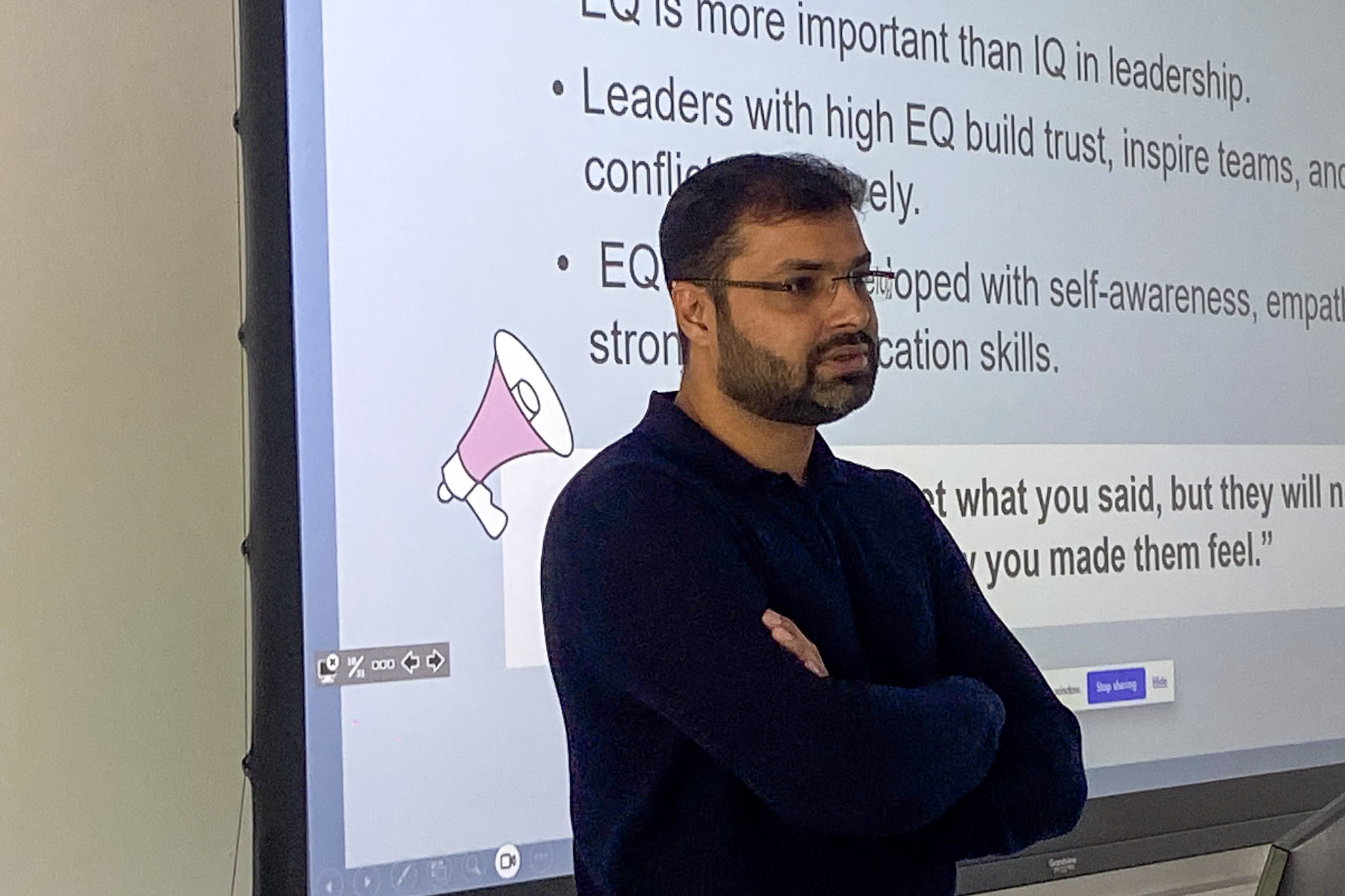
The students of Middlesex University Mauritius recently had the opportunity to attend an inspiring and intellectually engaging lecture titled “The Tri-Intelligence Edge (IQ–EQ–SQ): Advocacy That Sticks.” The session, which took place on 28 October from 11 AM to 12 PM, was led by Dr. Krishna Athal, who was invited as a guest speaker, accompanied by a dedicated team from YUVA Mauritius.
The event brought together around 30 international students, creating a multicultural space for learning and reflection on how advocacy can be enhanced through the integration of intellectual, emotional, and spiritual intelligence.
An Initiative of the Middlesex University Mauritius Moot Society
The lecture was organised under the leadership of the Moot Society — a student-led body that promotes debate, public speaking, and critical thinking on campus. The successful event was coordinated by three core members: Reeya Gaju, Secretary; Narsheen Bhuiyan, Chairperson; and Hillary Jaunky, Vice-Chairperson.
Their collaborative effort ensured the session ran seamlessly, with a balance of academic depth and practical engagement. The event stood out as a platform that merged leadership, psychology, and communication — all crucial components of effective advocacy in the modern world.
The presence of YUVA staff further enriched the session, helping to create an open and participatory environment. Together, they provided valuable insights and support that encouraged students to think beyond traditional advocacy frameworks.
Understanding the Tri-Intelligence Edge
The central theme of the lecture — The Tri-Intelligence Edge — offered students a fresh perspective on human capability and influence. The concept explores the interplay between three key forms of intelligence:
- IQ (Intellectual Quotient): The ability to think critically, analyse information, and construct logical arguments.
- EQ (Emotional Quotient): The skill to understand, manage, and express emotions effectively while empathising with others.
- SQ (Spiritual Quotient): The deeper sense of purpose, integrity, and awareness that drives ethical decision-making and meaning in one’s actions.
The discussion focused on how each dimension contributes to developing advocacy that not only persuades but also resonates and lasts. Students were encouraged to reflect on how a well-balanced integration of IQ, EQ, and SQ can make communication more effective, authentic, and human-centred.
By combining these intelligences, advocacy transforms from a simple act of persuasion into a movement of conscious influence — one that connects logic with empathy and moral purpose.
Engaging Minds and Voices
The atmosphere during the lecture was vibrant and interactive. Students participated eagerly, asking thoughtful questions and sharing their own cultural perspectives on advocacy, leadership, and social change.
Dr. Krishna Athal guided the discussion by highlighting real-world examples where advocates and leaders have used emotional and spiritual intelligence to bring about sustainable impact. Participants explored scenarios in which intellectual ability alone was not enough to influence people, emphasising the need for emotional resonance and ethical grounding.
For the diverse group of international students, this approach was especially valuable. It allowed them to connect their academic learning with the soft skills necessary for effective leadership and global citizenship. The discussions encouraged introspection — asking students to think not only about how they communicate, but why.
The Role of Emotional and Spiritual Intelligence in Advocacy
One of the most discussed points of the session was how emotional intelligence and spiritual intelligence enhance traditional advocacy methods. While IQ equips individuals with reasoning and structure, EQ and SQ bring depth and authenticity to interactions.
Students explored how emotional awareness helps advocates build trust and how spiritual awareness anchors their arguments in values and integrity. Through guided questions and group reflections, the lecture invited students to look inward — to understand how their own motivations, emotions, and beliefs influence the way they advocate for causes.
The emphasis on balance between thought, emotion, and purpose resonated strongly with the participants. Many students expressed how the discussion broadened their perspective on leadership and communication, especially in multicultural and international settings.
Collaboration and Learning Beyond the Classroom
The collaboration between Middlesex University Mauritius, the Moot Society, and YUVA Mauritius made this lecture a successful and enriching experience. The initiative represented the power of partnerships between academia and social organisations, showing how theory and practice can come together to inspire students toward meaningful engagement.
Throughout the one-hour session, students experienced not only academic learning but also personal growth. The conversations encouraged them to view advocacy as an act of empathy and purpose rather than competition or persuasion. This holistic view of leadership aligns with the growing global emphasis on emotional and ethical intelligence as key components of success in any field.
The event also served as a bridge between different cultural perspectives. With students from multiple countries in attendance, the dialogue extended beyond Mauritius, touching on universal principles of leadership, advocacy, and human connection.
Reflections from Students and Organisers
Feedback from students reflected a deep appreciation for the opportunity to explore such a nuanced topic. Many noted that the session challenged them to think differently about advocacy — to see it as something deeply human and relational.
The organising team — Reeya Gaju, Narsheen Bhuiyan, and Hillary Jaunky — expressed pride in hosting such an insightful and empowering lecture. They highlighted how the event aligned with the Moot Society’s mission to nurture articulate, socially conscious, and reflective leaders within the student community.
The YUVA representatives also emphasised the importance of fostering young leaders who not only think critically but also act compassionately. Their collaboration with Middlesex University Mauritius reflects YUVA’s ongoing commitment to youth empowerment, education, and leadership development across the island.


Tereza Röslerová – Communications Officer

Leave a Comment