


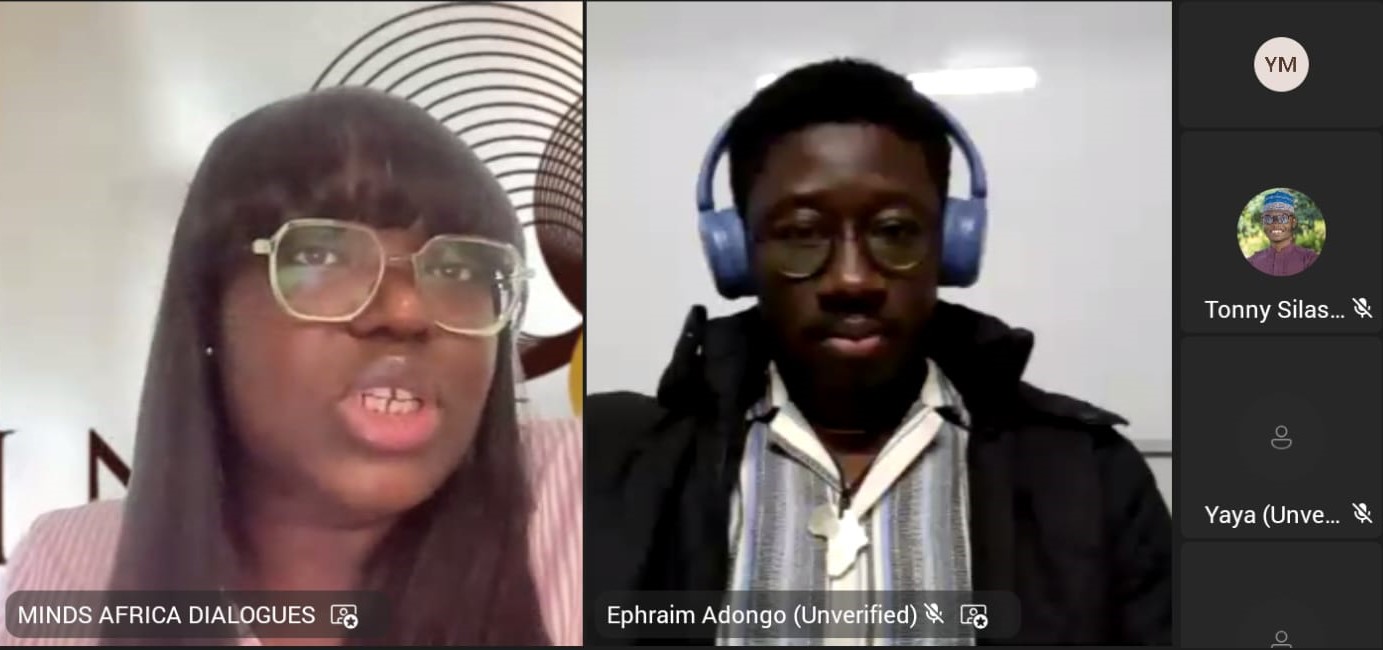
On Tuesday, 1st July 2025, YUVA Mauritius proudly took part in an insightful and thought-provoking Online Youth Dialogue on Democracy hosted by the Mandela Institute for Development Studies (MINDS), under its Youth Programme on Elections and Governance (YPEG). The session, titled “Youth Leadership in the Continent: An Analysis of Ibrahim Traore and the Botswana Cabinet”, brought together young voices and leaders from across Africa for an honest and passionate conversation about the future of leadership and democracy on the continent.
The event featured prominent speakers such as Victor Bor, Atone Zwinani, Ephraim Adongo, and Baboucarr Nyang, who each brought unique perspectives to the discussion. The dialogue was vibrant and interactive, with participants from various African nations—including members of YUVA Mauritius—contributing openly and candidly.
A Continent in Conversation
The discussion kicked off with a critical analysis of Burkina Faso’s Ibrahim Traore and the relatively stable, democratic structure of the Botswana Cabinet. This contrast sparked a wider conversation on media narratives, international influence, and the authenticity of African governance models.
One of the most debated points was the portrayal of African events by global media houses like the BBC and CNN. Participants questioned why these outlets suddenly show increased interest in countries like Burkina Faso, while historically ignoring ongoing issues. A recurring sentiment was the need for Africans to seek out independent journalists and local media narratives that present stories from within the continent, not through foreign lenses.
“Have you asked yourself why all of a sudden BBC and the like are interested in Burkina Faso? Why haven’t we cared for the atrocities happening there until now?”
– Participant from Nigeria
Questioning Democracy as We Know It
The dialogue quickly evolved into a deeper interrogation of democracy itself. While countries like the US, UK, and Germany are often presented as models of democratic governance, many participants questioned whether democracy—at least in its Western form—has ever truly worked in Africa.
“Africans did not participate in the formulation of this concept. That in itself is not democracy,” one speaker remarked.
There were passionate arguments about whether liberal democracy has failed in Africa, with multiple participants calling for alternative systems that are more reflective of African values and community-based governance.
“We need a participatory African socialism that blends traditional governance, direct democracy, and equitable economic systems.”
Others pointed to the economic and social stability of Libya under Muammar Gaddafi as an example of a non-democratic government that nonetheless delivered for its people—though acknowledging the regime’s suppressive practices.
“Democracy in Africa often feels like corruption in disguise—packaged for appearances but failing the people,” another participant added.
Some raised the controversial idea of a hybrid system, combining the structure of democracy with the discipline of military leadership, provided the intent is sincere and for the people’s benefit.

YUVA Mauritius Engages in Continental Dialogue on Youth Leadership and Democracy in Africa 
YUVA Mauritius Engages in Continental Dialogue on Youth Leadership and Democracy in Africa 
YUVA Mauritius Engages in Continental Dialogue on Youth Leadership and Democracy in Africa 
YUVA Mauritius Engages in Continental Dialogue on Youth Leadership and Democracy in Africa 
YUVA Mauritius Engages in Continental Dialogue on Youth Leadership and Democracy in Africa 
YUVA Mauritius Engages in Continental Dialogue on Youth Leadership and Democracy in Africa 
YUVA Mauritius Engages in Continental Dialogue on Youth Leadership and Democracy in Africa 
YUVA Mauritius Engages in Continental Dialogue on Youth Leadership and Democracy in Africa 
YUVA Mauritius Engages in Continental Dialogue on Youth Leadership and Democracy in Africa 
YUVA Mauritius Engages in Continental Dialogue on Youth Leadership and Democracy in Africa
Reimagining Leadership and Representation
The dialogue raised essential questions:
- Are the people of Gabon happy with Nguema?
- Are the people of Burkina Faso happy with Traore?
- Are the people of Cameroon happy with Biya?
- Who decides which countries are democratic?
Participants agreed that real representation must come from within, not be dictated by foreign powers or external definitions. There was a strong call to reclaim African leadership on African terms—with leaders chosen by the people, for the people, and free from foreign influence.
YUVA Mauritius Perspective
YUVA Mauritius values platforms like these, where young Africans can share bold ideas, challenge norms, and reflect on the systems that govern them. The session reaffirmed our commitment to empowering youth to become ethical, independent, and visionary leaders—not just within Mauritius, but across Africa.
We extend our sincere appreciation to MINDS for facilitating this much-needed conversation and for creating space where African youth can reimagine leadership and governance beyond imposed narratives.
As we continue building regional and continental solidarity, YUVA Mauritius will carry forward the lessons and energy from this dialogue into our work with young changemakers, encouraging them to question, challenge, and ultimately transform the systems around them.

Leave a Comment