


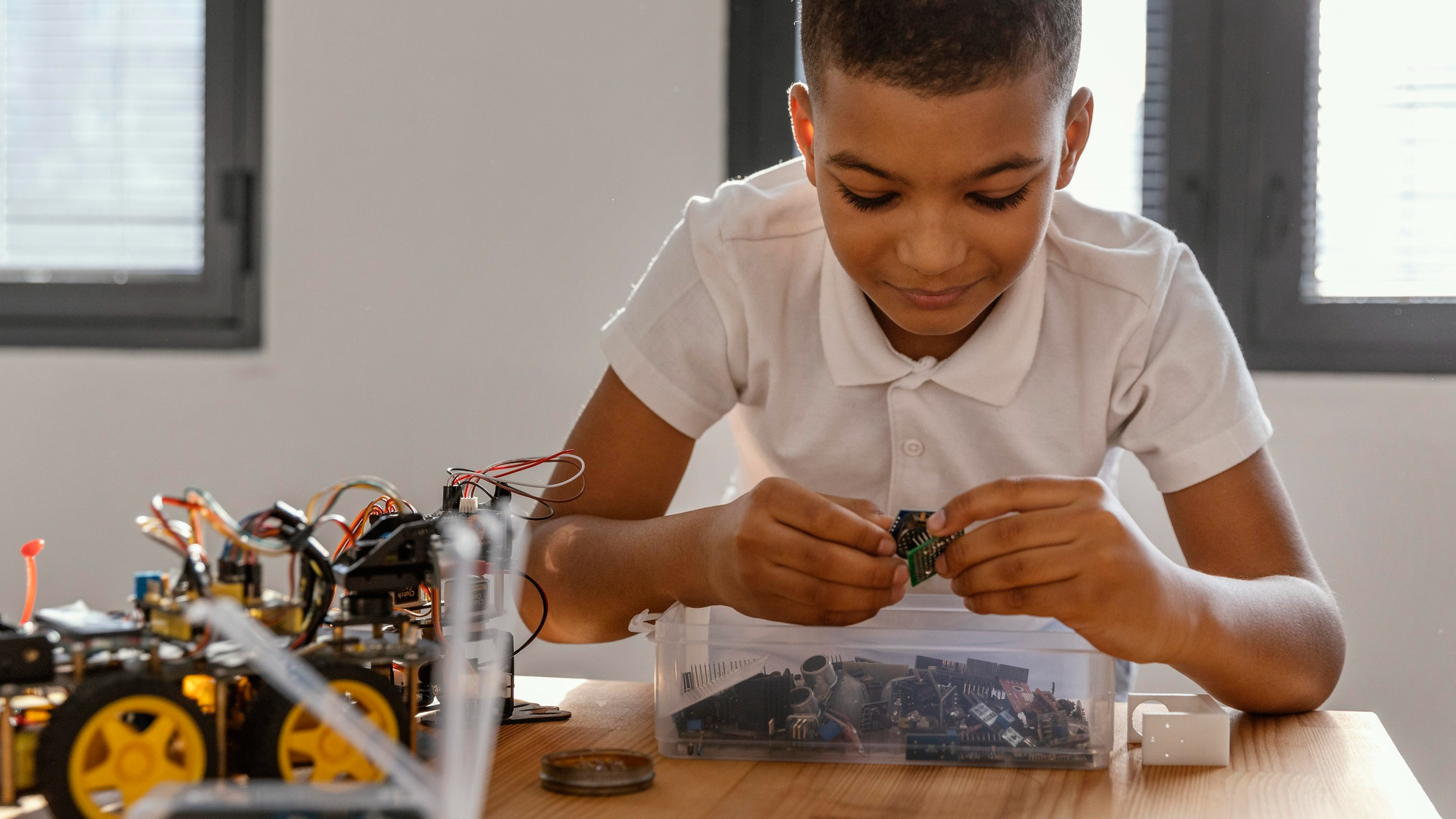
This article dives into the significance of hands-on learning in STEM education in Mauritius, particularly in early childhood, and explores how embracing these methodologies can shape the future of Mauritius.
In an era dominated by technological advancements and rapid scientific discoveries, the importance of STEM (Science, Technology, Engineering, and Mathematics) education cannot be overstated. Across the globe, educators and policymakers are recognising the need to cultivate a workforce equipped with the skills necessary to thrive in the 21st century. Mauritius is no exception.
The Global Importance of Hands-On Learning in STEM
Hands-on learning, also known as experiential or tactile learning, involves actively engaging with concepts through practical applications rather than passively absorbing information. This approach enhances understanding and fosters critical thinking, problem-solving, and creativity.
Globally, the push for hands-on learning in STEM is driven by the realisation that traditional teaching methods fall short in preparing students for the challenges of a rapidly evolving world. The practical application of theoretical knowledge bridges the gap between classroom learning and real-world problem-solving, nurturing a generation of thinkers, innovators, and creators.
In an interconnected world where technological advancements shape industries and economies, hands-on learning in STEM becomes an indispensable tool for cultivating a workforce that can adapt and thrive. As countries strive for innovation and competitiveness, the global significance of hands-on learning lies in its ability to produce skilled individuals who not only grasp theoretical concepts but can apply them to address complex issues, ultimately contributing to the progress and resilience of societies worldwide.
Early Childhood Development and Hands-On Learning
Early childhood is a critical period for cognitive development, and hands-on learning is especially beneficial during this phase. Children are naturally curious and learn best when they can touch, manipulate, and explore the world around them. Hands-on activities in STEM subjects make learning fun and lay the foundation for a lifelong interest in these fields.
Interactive experiments and projects enable young minds to grasp complex concepts tangibly. Whether building simple machines or exploring essential chemical reactions, hands-on learning stimulates a child’s curiosity and encourages a positive attitude towards learning. Moreover, it cultivates skills such as teamwork, communication, and perseverance from an early age.
The Universality of Hands-On Learning Across Ages
While hands-on learning is especially crucial in early childhood, its benefits extend across all age groups. In secondary and tertiary education, practical application reinforces theoretical knowledge and prepares students for the demands of their future careers. Even in professional settings, continuous learning through hands-on experiences remains a powerful tool for skill development and adaptation to new technologies.
Why Hands-On Learning in STEM Matters
- Bridging the Gap between Theory and Practice: Hands-on learning is essential in STEM education, effectively connecting theoretical knowledge to practical application. Immersing individuals in real-world scenarios provides a comprehensive understanding of STEM concepts.
- Encouraging Critical Thinking: Through interactive activities, hands-on learning challenges individuals to think critically. This emphasis on problem-solving and analytical thinking is vital for success in STEM fields, where practical application is key.
- Fostering Creativity: Engaging individuals with STEM subjects and hands-on learning sparks creativity. The interactive nature of these experiences encourages innovative thinking, a crucial skill for navigating the complexities of the modern world.
- Developing Lifelong Learners: Hands-on learning goes beyond skill development; it contributes to forming lifelong learners. Instilling a genuine love for learning nurtures a mindset of curiosity and exploration that extends well beyond formal education. This approach imparts knowledge and fosters a continuous desire to seek understanding throughout one’s life.
STEM Education Shaping Maåuritius’s Future
In the context of Mauritius, embracing STEM education and hands-on learning is key to shaping a future-ready workforce. The rapid digital transformation in various industries necessitates a skilled workforce capable of adapting to new technologies and driving innovation.
STEM education equips individuals with technical skills, hones problem-solving abilities, and nurtures an entrepreneurial spirit. In a globalised economy, where innovation is the driving force, Mauritius stands to benefit significantly from a populace well-versed in STEM disciplines.
Furthermore, integrating STEM education in Mauritius goes beyond immediate economic benefits; it builds a foundation for sustained societal advancement. By nurturing problem-solving skills, STEM education empowers individuals to address complex challenges ranging from environmental issues to healthcare disparities. The entrepreneurial spirit cultivated through hands-on learning positions Mauritius as a technological hub and a source of innovative solutions for broader societal issues. This holistic approach ensures that the impact of STEM education extends beyond the professional realm, playing a transformative role in shaping Mauritius’s future.
YUVA’s Initiatives in Mauritius
Recognising the pivotal role of STEM education, YUVA, with the support of the Canada Fund for Local Initiatives (CFLI), has launched initiatives to promote hands-on learning and raise awareness about its importance in Mauritius. These initiatives include workshops, training programs, and community outreach activities designed to make STEM education accessible to a broader audience.
YUVA endeavours to integrate hands-on learning into the curriculum, ensuring that students across Mauritius can engage actively with STEM subjects. Through these efforts, YUVA aims to cultivate a culture of curiosity, exploration, and innovation, laying the groundwork for a brighter future for Mauritius.

In conclusion, the importance of hands-on learning in STEM education cannot be overstated globally and in Mauritius. By adopting experiential learning methods, especially in the formative years of childhood, individuals are empowered with the skills needed to navigate an ever-evolving world. Mauritius’s commitment to STEM education, exemplified by initiatives like those by YUVA, reflects a forward-thinking approach crucial for the nation’s development and prosperity in the years to come.
Nicole Marchetti, MA International Relations - Communications Officer (YUVA STEM Education Projects)

Leave a Comment